
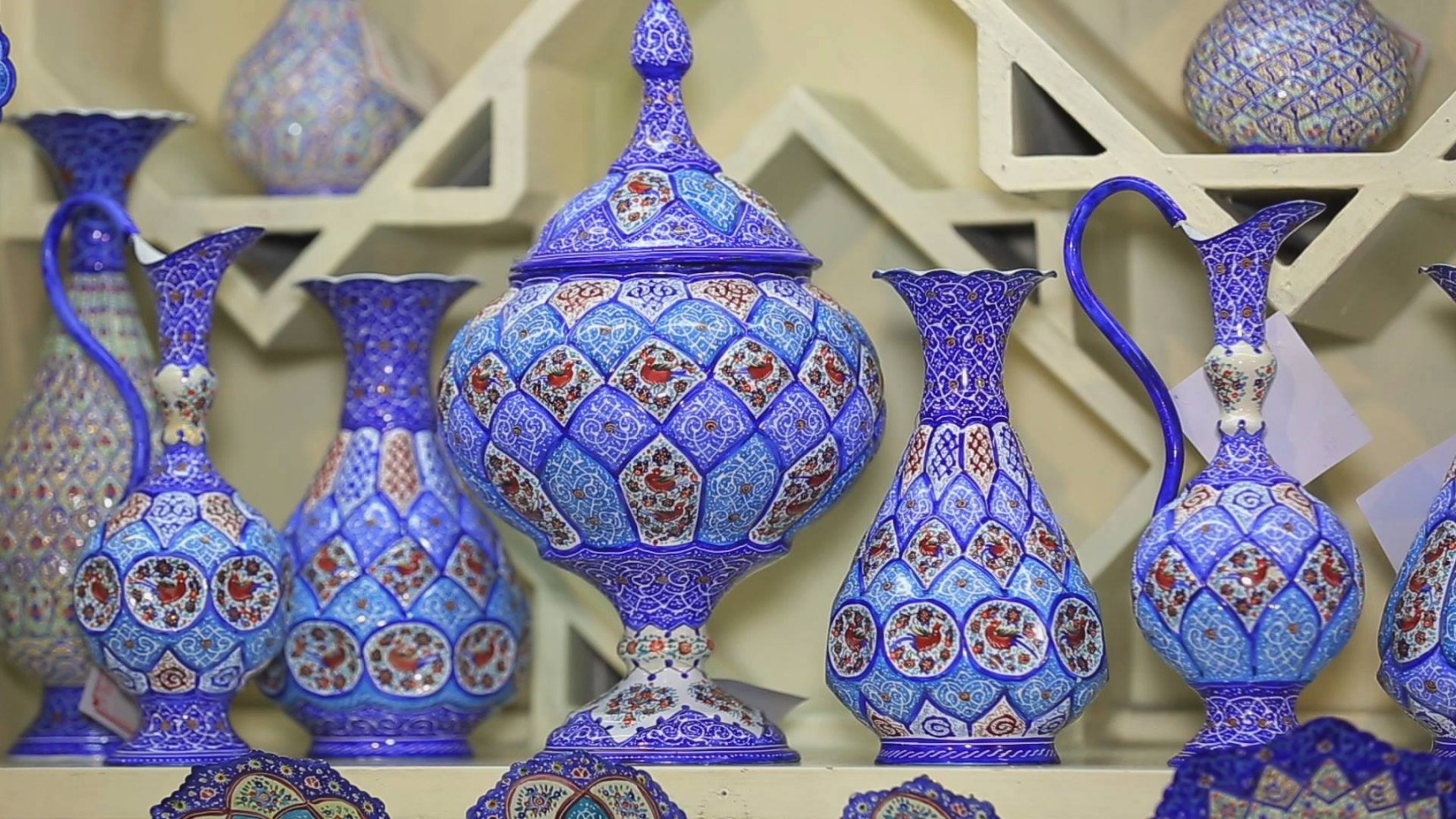

Enamel work
Introduction
This industry has a long history in Iran and some experts believe that its history dates back to five thousand years ago. Mina reminds people of copper due to using copper a lot in this technique. It is better to use gold and silver but copper is much cheaper. Mina is shaped of the combining metals oxides and some types of salt in an 80 centigrade. Enamel which is called Mina in Farsi means sky and this name really suits it because of its color and plan that usually looks like a real sky. Enamel’s planes are usually painted on golden, silver and copper materials. The dominant used color is blue and green but sometimes red. It is noticeable that most of the people know Enamel work by its blue color which reminds them of sky.
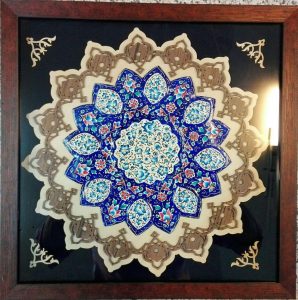
This art is a combination of fire and soil; two sacred elements for ancient Iranians, which is combined by painting art and produces an extraordinary unique output.
There is no doubt that this art is a pure Iranian art which was exported to other nations n all around the world. In famous museums all over the world you can visit the Iranian enamel work antiques but those in Iranian bazaars are something else which not only can coop up with the antique ones but also are much better in same aspects. This shows that this art has developed very well during thousand years and so many youngsters; boys and girls, not only have kept and protected but also developed the art of their ancestors. We can call them the pupils who have learnt how to be a master.
Technic explanation:
Enamel work includes two types like painting and Khane bandi (network design) based on the way of producing.
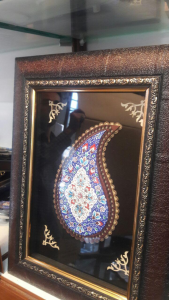
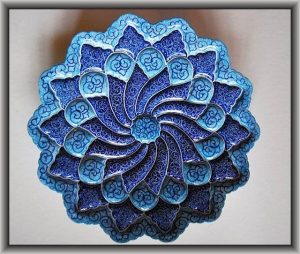
In the first type; which is more contemporary and is broadly used in Esfahan, the designs of Mina is shaped on a clear saliva. The master of repoussage should make something based on the plan, then a master of enamel work puts a white salvia on it. They do it for four times and each time they use 700 centigrade in order to stabilize the colors. In next level they paint on the white saliva and put it in 500 centigrade to cook the colors.
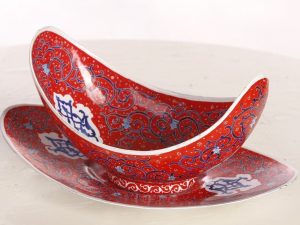
In past, the natural colors were used but today the chemical ones are used instead as much easier method. The nice clearness of Mina is because of Tin oxide which used to be common in old times. They wrap the saliva made of Silica and metal’s Rusts with Tin then using heat connect blurred Mina to metal by welding so at this time the plans are drawn and melt in glassware colors.
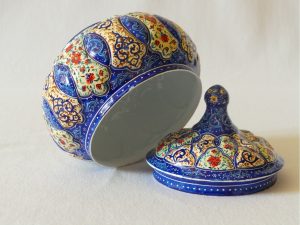
In the second method which is called Khane bandi (networking) which is also known as wiry enamel, the narrow wires are used. At first they shape the wires and attach them by glue on the product then cover it by a glassy salvia. In next level they use 1000 centigrade to connect the wires to the product, afterwards the special colors of enamel work cover the surface in powder shape.
After smoothing the surface they cook it for 3 minutes in 1000 centigrade. The wires would eliminate black color because of being inside the furnace by acidizing. The black Mina is also famous as Saebin in south of Iran and has a lot of followers.
Types of products:
- Dish, vase, rhyton, tabloid and photo frames.
- Door, window and shrine.
- Ornamented things like jewel or cosmetics boxes, tea service set, hubble-bubble, Quran’s boxes, shield, mirror, belt, pencil case, enamel work bubbles, knife sheath.
- Ornaments like neckless, ring, medallion and earrings.
It is considerable that this technique is also combined by some other techniques such as inlaid work, miniature and wood mosaic and so on.
The cities of production:
Esfahan, Tehran and Ahwaz
