

Carpet, Kilim, Jajim and Zilu
Introduction:
The Iranians have always cared a lot about their home interior design during the history, as inside their homes and houses even today are much nicer than the exterior design. That’s why you see great stucco work, mirror work, nice curtains and specially somethings that they lay on the floor which could be carpet, kilim, jajim and zilu. Those laid items perse’, usually give homes and houses, especial glory.
- Carpet:
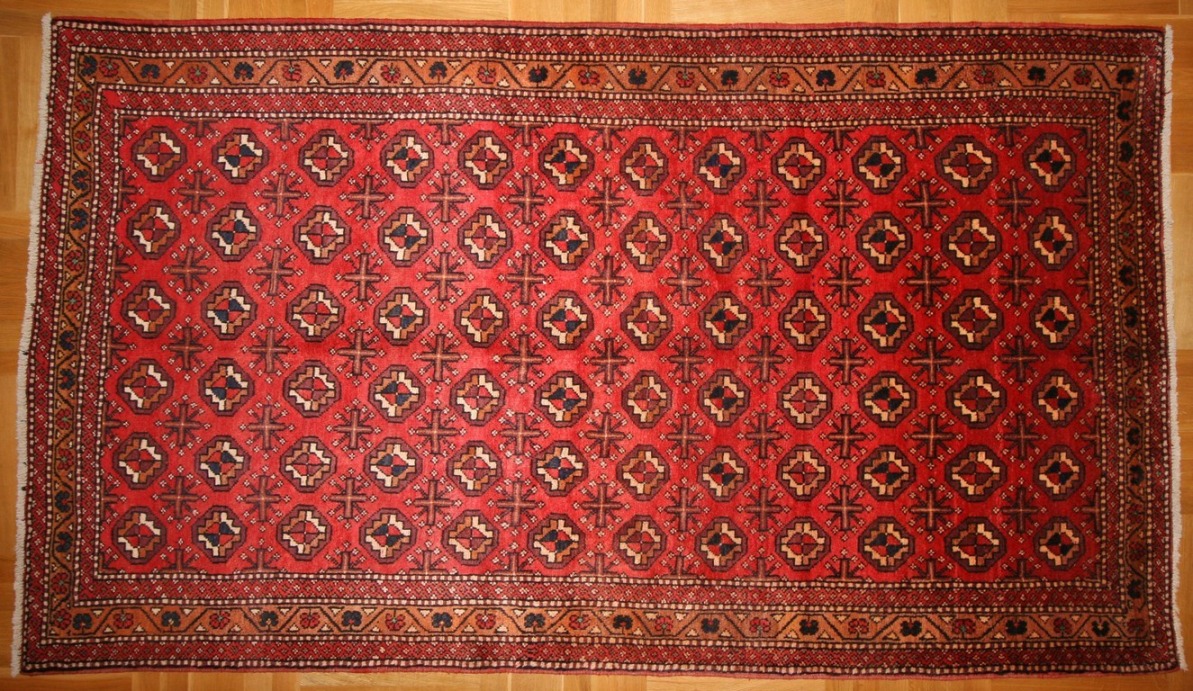
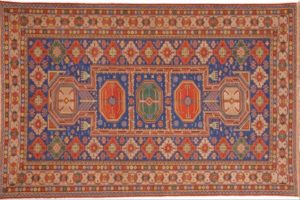
Frankly speaking the best presentation and acme of Iranian art is carpet which have presented itself as the symbol of Iran worldwide. There is almost no where on earth that carpet reminds people of Iran. Weaving carpet dates back to at least three thousand years ago. The first founded and discovered carpet is called Pazirik which dates back to Achaemenids era. It is amazing that the carpet industry has been developing day by day and has passes down from fathers to sons precisely. The carpet is so valuable for Iranians, in which they find their identity and history. Generally speaking the carpets are woven in urban style or nomadic style. The first one is in order and has regular plans and is very good for mass production but on the other hand the latter doesn’t follow any special rule or order and each one is something exclusive. The urban plans includes Shah Abbassi, Cypress, Afshan, Islamic, Adaptation, Vagirei, Tree, Turkeman, Hunting ground, Clay, Flower, Vase, Alter, Fishes, geometric and combined plans. Sometimes in rural planes also you may see the urban plans which scarcely happens.
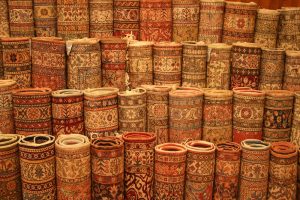
Many countries like such as china, India and Turkey and some others have tried so hard to equal to Iran, to take its place in carpet industry but none of them could succeed due to the great Iranian carpet weavers.
It is considerable that kilim is also like carpet in weaving but has more rural and nomadic motifs. Types of Iranian kilims are Turkman, Zarandi, Mazandaran, Afshari, Ghashghaei, Sane, Khamseh, Baluch, Hersin, Lor and Shahsavan.
Technique explanation:
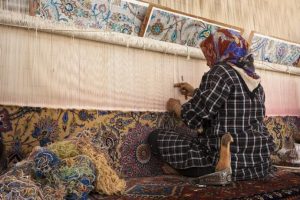
To weave the carpet, firstly the carpet loom is provided based on the size of the carpet which could be horizontal or vertical. Secondly the main yarns are installed on the loom. The woof’s yarns passes through the warps to shape the carpet. The cord could be in wool, silk and cotton and should be installed firmly. The map of carpet is woven horizontally and step by step.
The used colors in carpets are natural and extracted from pomegranate, fig and walnut’s shell and even pistachio and madder. These fruits are boiled then the yarns are added to them and later some stabilizer materials are added to stabilize the colors in carpet.
The cities of production:
Qom, Esfahan, Tabriz, Nain, Kashan, Kerman, Mashhad, Yazd and Tehran
- Zilu
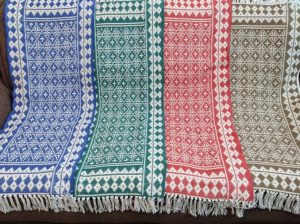
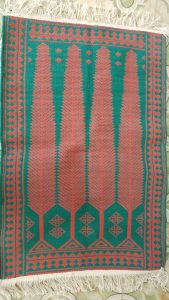
Another item which is used on the floor is called Zilu that is considered a rural product. Zilu is actually a carpet made of cotton which is mostly used in hot and dry villages of Iran. It looks like a mat whose usage dates back to ancient Iran. Zilu doesn’t have various colors and are found just in blue, white, green, orange, red and brown. The used plans in Zilu are mostly abstracts and present the culture of people in dessert indirectly. Weaving Zilu is very similar to weaving carpet, but in details and the tools is very different.
The cities of production:
South of Iran and Kurdish regions in Khorasan and Yazd.
- Jajim:
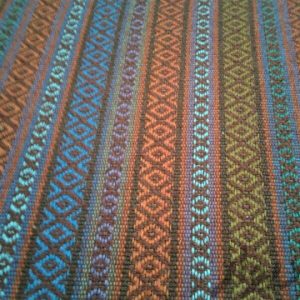
Another type of the items which is used on the floor is Jajim which has a long history in Iran and is usually woven of wool. Jajim has rural pattern like Zilu and has so many weavers among nomads and villages in cold regions due to its strength against cold.
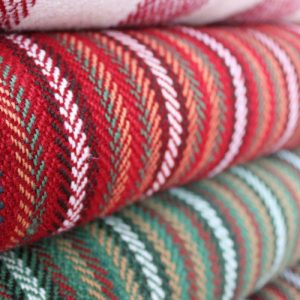
Nowadays Jajim does not have so many demands in comparison to carpet, Kilim and Zilu but is considered as one the best woven items in Iran.
The producers:
Shahsavan nomads in Moghan plain, Bakhtiaries, The Kurds in Kurdistan and Kermanshah, Ghashghaei nomads, the people in Taleghan, Hamedan and Zanjan
